Annual reports are ubiquitous and essentially required for nonprofit organizations and associations. Every organization wants to document its activities, successes, and impact. It is a challenge, however, to know how to evaluate the success of the annual report in meeting its intended goals.
There is not one size that fits all organizations. In reviewing a variety of reports, one can see they range in content and style from over 100 pages that report on every committee’s activity and outcomes to 7-10 page glossy mailers that are graphic heavy. However, there are three screens that can be used to determine whether your annual report is accurately reflecting what you want to reflect in presenting your organization’s annual statement of activity and impact.
Examine The Top Line
Marshall Mcluhan famously said, “The medium is the message.” This is definitely true for your annual report. It is vital to determine whether the design and packaging reflects the culture and messaging of your organization fairly and in the way you want to be presented. There needs to be congruence between the format, design, graphics, and “glossiness” of your annual report and the “soul” of your organization. A text heavy, detailed, and relatively “unadorned” annual report may fit the culture of a technical, scientific organization in a way that a glossy, tri-fold or “doormat” size of publication (assuming you still do hard copy annual reports) may not.
On the other hand, too detailed an annual report may never read fully, lessening its impact. The meta-message may be “don’t even open this until you have an hour to see if you can find out what is really significant to you.” Take time before gathering content to think through the medium you will use to present the material. Now, more than ever, just pulling the template from last year’s report and plugging in new content will not signal vibrancy. How far you go is up to you. Also, though, find out how any content might be viewed on various platforms and browsers—especially (and hopefully) with a website that has responsive design.
Define The Bottom Line
What is the one thing that is most important for you to convey that happened in your organization this year? How does it relate to your mission and priorities? How does everything else you do align in helping to achieve those priorities? And very importantly, how is your organization achieving impacts in a sustainable way?
You will do better to front-load your key impact statement. That may not be a standard format, which typically would lead with a letter from the Chief-Elected or Chief-Staff officer. Even if your culture or precedent requires the “letter” format as a lead in to the rest of the content, make sure you front load the most important messages in digestible form early in the report. Think of your leading material as a newspaper article that will report the most why, what, when, where, and how messages quickly and memorably. Do not backload this material!
Sustain The Through Line
What is the theme that holds your report (and your work) together? A theme can be a primary value, a focus on your mission, or a reflection of your most critical priorities. How is that primary theme, however you have defined it for the year, reflected through the different sections of your annual report? Does the report have coherence? Does it build the case of your impact through the various components in a way that amplifies the messages you want to make sure are received by those who look at your annual report?
Focus on your top line, bottom line, and through line. Let some readers (not the most engaged volunteers, but closer to the “person on the street” level of knowledge) read your report. See what they take away from it—and if it isn’t what you wanted someone to remember, change it. Annual reports aren’t just your statement of a year of work. They become your organization’s archival story. Make sure it is a good one!
If you’d like to take a look at two different organizations’ annual reports, with vastly different budget/staff sizes, missions, and focus, take a look at the Arlington Free Clinic (AFC), and the American Chemical Society (ACS) annual reports. The AFC is a community based non-profit providing health care. The ACS is very large membership organization. Both present their story well, within their allowable budget and scope–consistent with the brand they have. ACS is able to produce an interactive, online annual report that jumps to more detail, while the AFC report is more .pdf/document like in presentation. Both, however, focus on presenting impact of work in a meaningful way.

 What makes a university experience so valuable—and life-changing? I’ve identified four aspects of the university experience that serve as the basis for developing professionals: access to a meaningful network, a hotbed for emerging content, a laboratory to experiment, practice, and grow, and a platform from which to launch.
 I’ve
I’ve 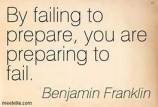 Note: The following post was created as part a series of 5 posts overall to address student members of professional associations about the value of membership and engagement.
 Native Americans have the concept of a medicine wheel, based on four directions: North, East, South, and West. While I am simplifying the concept, they believe that health is achieved through balance in these four directions.
 You are reading it everywhere: millennials have different expectations for a member experience than other demographic groups. Their history of social experience, being “digital natives” having come of age with social media, and the resultant values and norms create challenges for many associations who have built structures and features of membership primarily for boomers.
 Executive Director's Toolkit